Inside Becomes Visible
The inside did not come forward by speech. It came forward the old way: a lid lifted, a label read, a set recognized, a room beginning to gather its own logic again. Until then, too much of the house had lived under summary. Once the boxes started answering in their own language, summary began to lose.
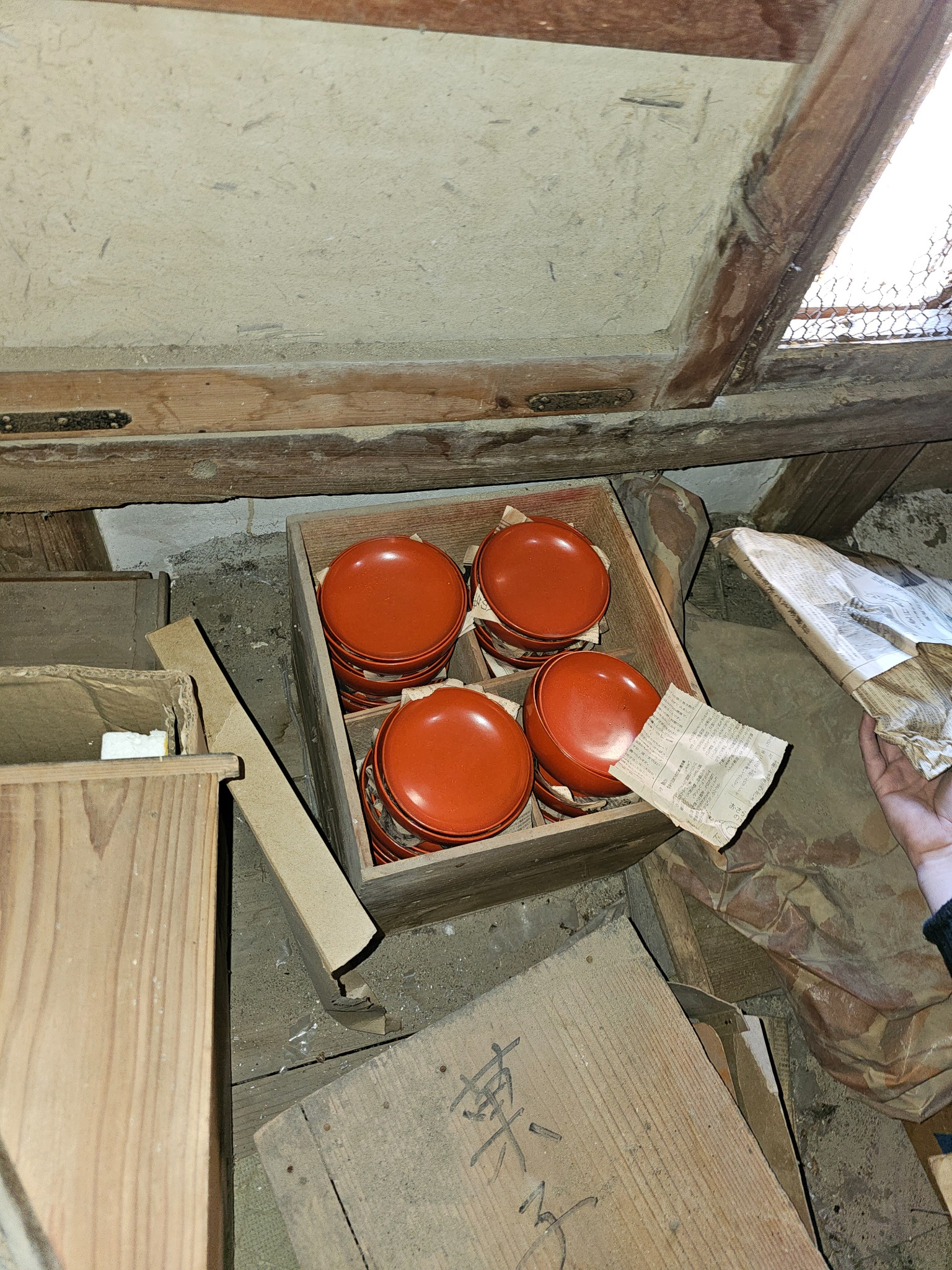
At a certain point, the house could no longer be carried only in memory, argument, or private feeling. It had to stand in the light. Not all at once. Not as a grand unveiling. More stubbornly than that. A label held. A box remembered what it was. A grouped set proved that someone once knew where things belonged. The inside began taking shape under the family’s hands, and once it did, the old blur could not quite return.
Before this, the house had often been forced to speak from its most difficult surfaces: grass at the edge, delay, fatigue, cost, distance, the repeated ache of not knowing how much could still be saved. Those truths had not lied. They had simply not been enough. The inside had kept another account. It had kept categories, sequence, labels, wrapping, order, survival, and the old domestic confidence that things stored carefully might one day be found again by someone able to read them.
The inside did not become visible all at once.
It became visible when the house could no longer be read only from the outside.
That was the statement the room finally made. Not by rhetoric. By proof.
Labels
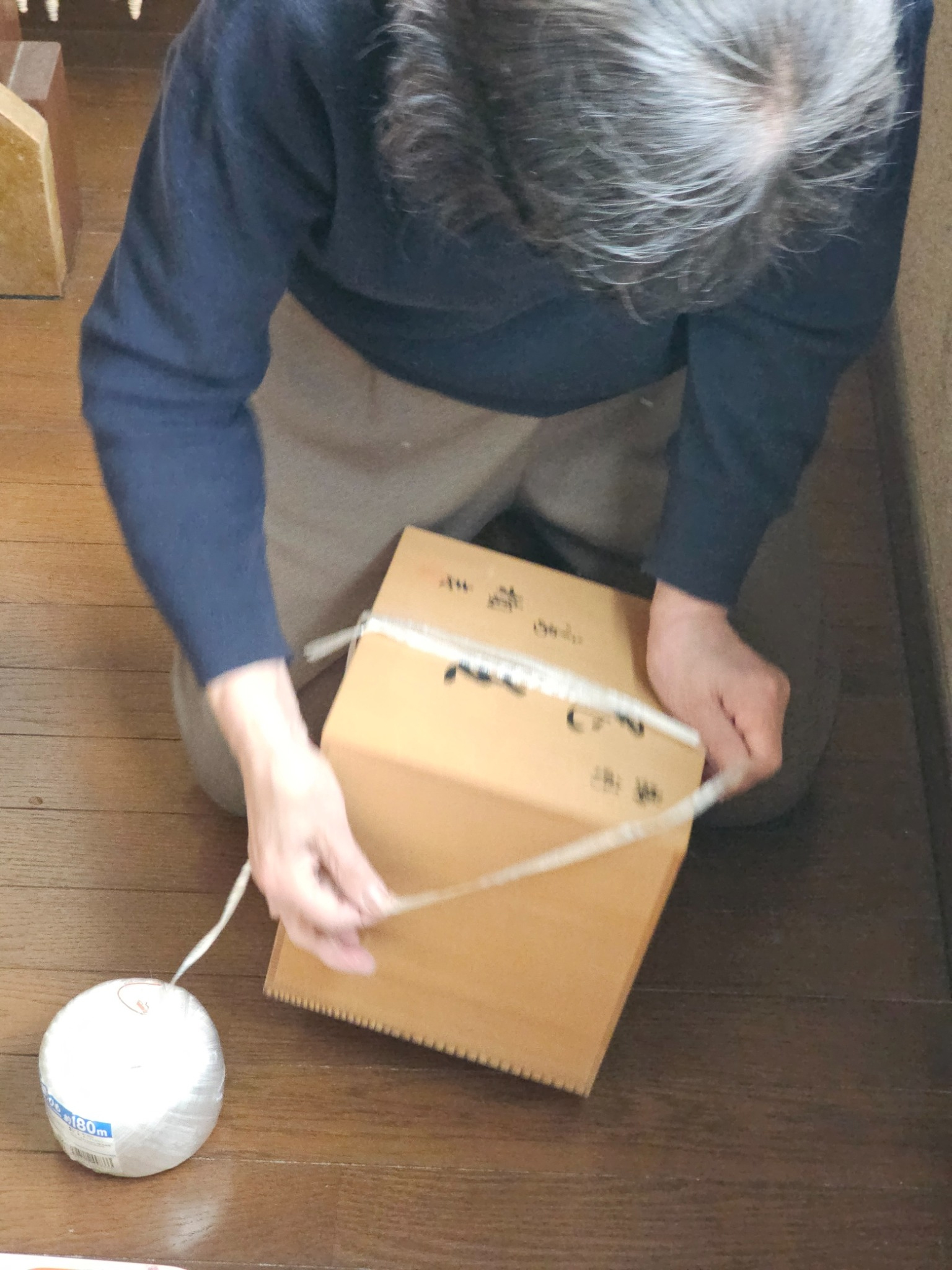
A label is a small refusal to vanish. It says that someone, at some earlier hour, believed the future might still need this thing and ought to be able to find it again in the right name. In an old house, that kind of sanity can feel almost startling. A label breaks the fog. It says this was not just put away. It was kept.
Once the lid lifted in Hanasaki, the box stopped being mute. It moved out of the category of “more old stuff” and back into household language. The contents belonged to something. The something had a name. The name belonged to a way of living that had once been specific enough to organize itself. A house begins defending itself the moment that kind of specificity returns.
For years, the family had been speaking around the house. The labels answered from within it.
Grouping
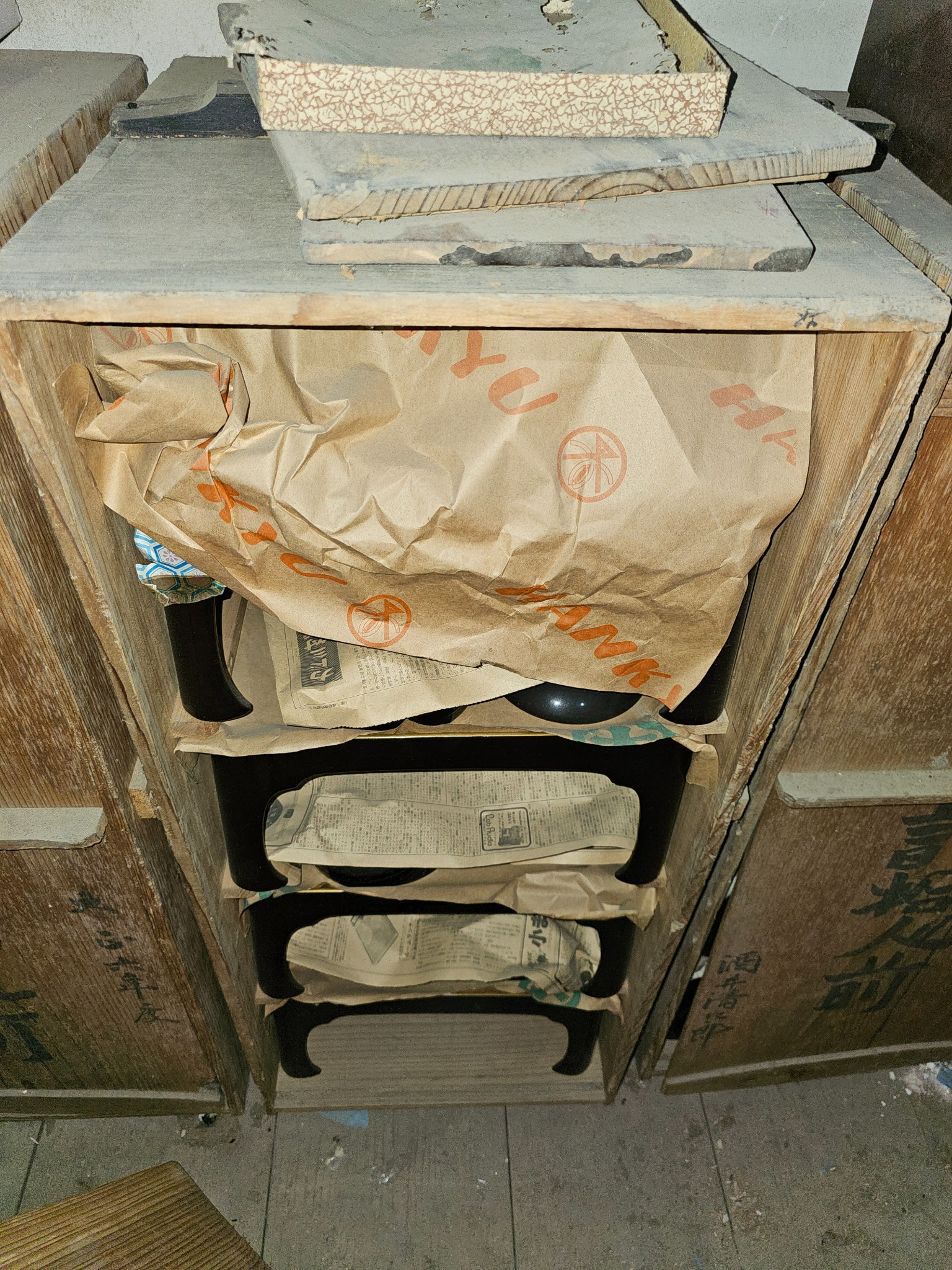
A single object can still be mistaken for accident. A group is harder to dismiss. Grouping restores relation, and relation restores thought. One piece answers another. One form repeats. One use calls across to another use. The room no longer says only too much, too old, too late. It begins saying this belonged together.
That shift is more powerful than it first appears. Once the eye sees relation, exhaustion loses some of its monopoly on the room. Burden remains. But burden now has to stand beside pattern. Pattern changes the argument without ever raising its voice.
The house had already begun doing this through shelves and carved work. Here the process moved lower, closer, more practical. The inside was not just present now. It was becoming intelligible.
The Sorting Room
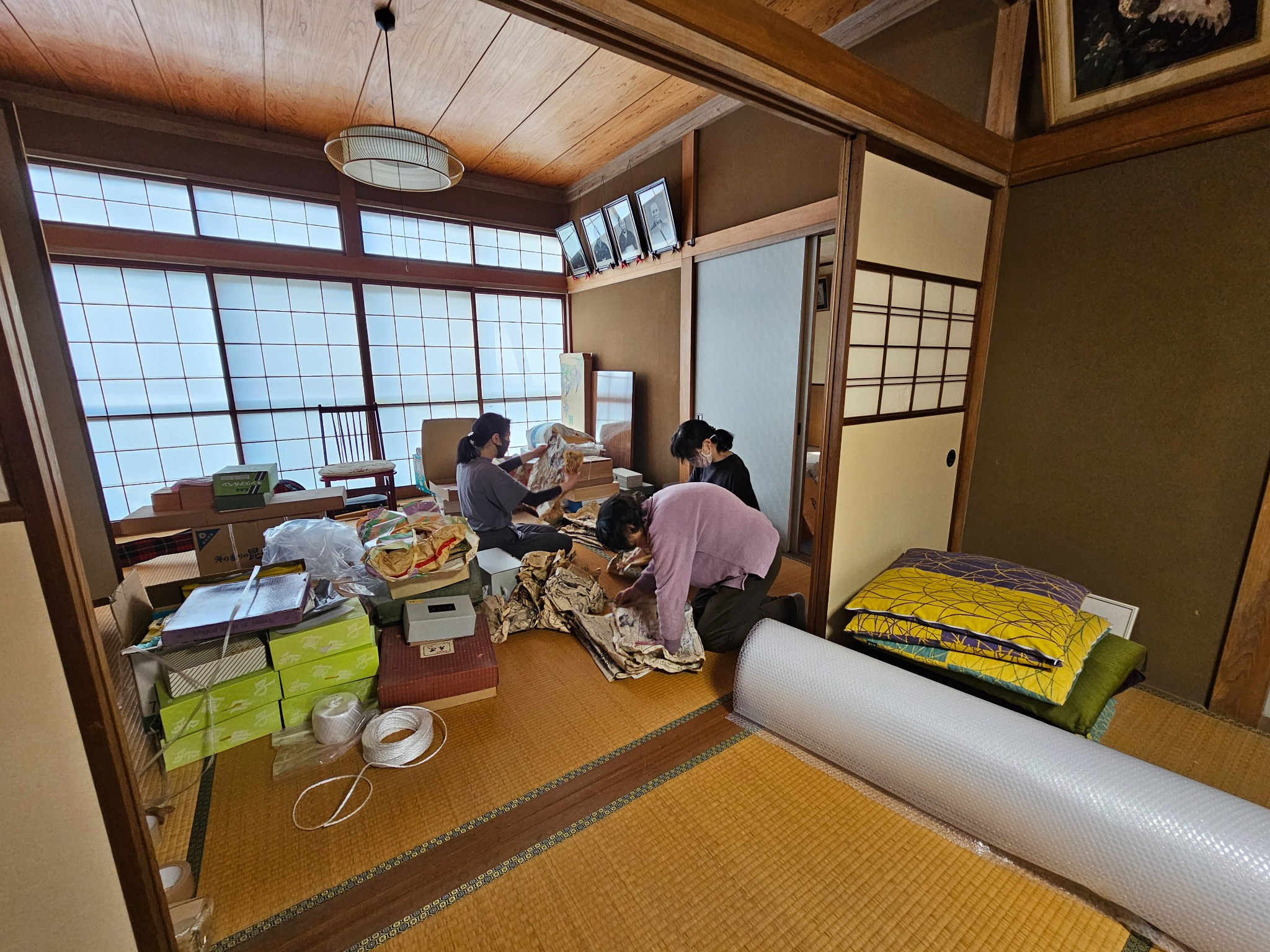
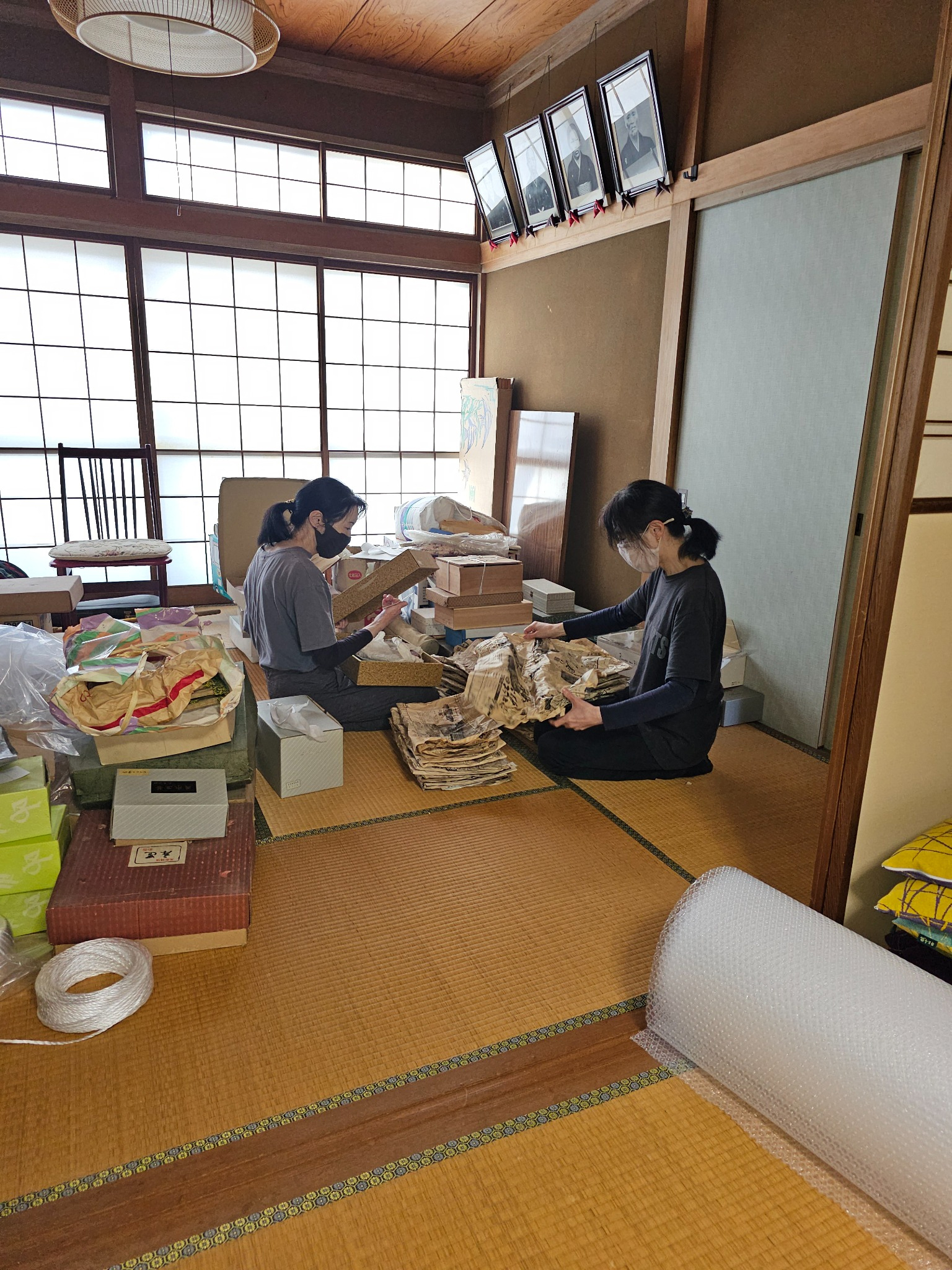
Sorting changes the air of a room. It does not have the immediate beauty of a painted scroll or a carved panel, but it does something equally important: it lets the house feel answered in real time. Things once buried become encountered. Corners once avoided become entered. A room that had been carrying too much in silence begins to show signs that someone has come back not merely to extract from it, but to read it.
That middle condition matters. The room is not untouched anymore, but it is not erased either. It stands there half-open, half-handled, actively becoming legible. That is one of the truest states an old house can have.
Documentation
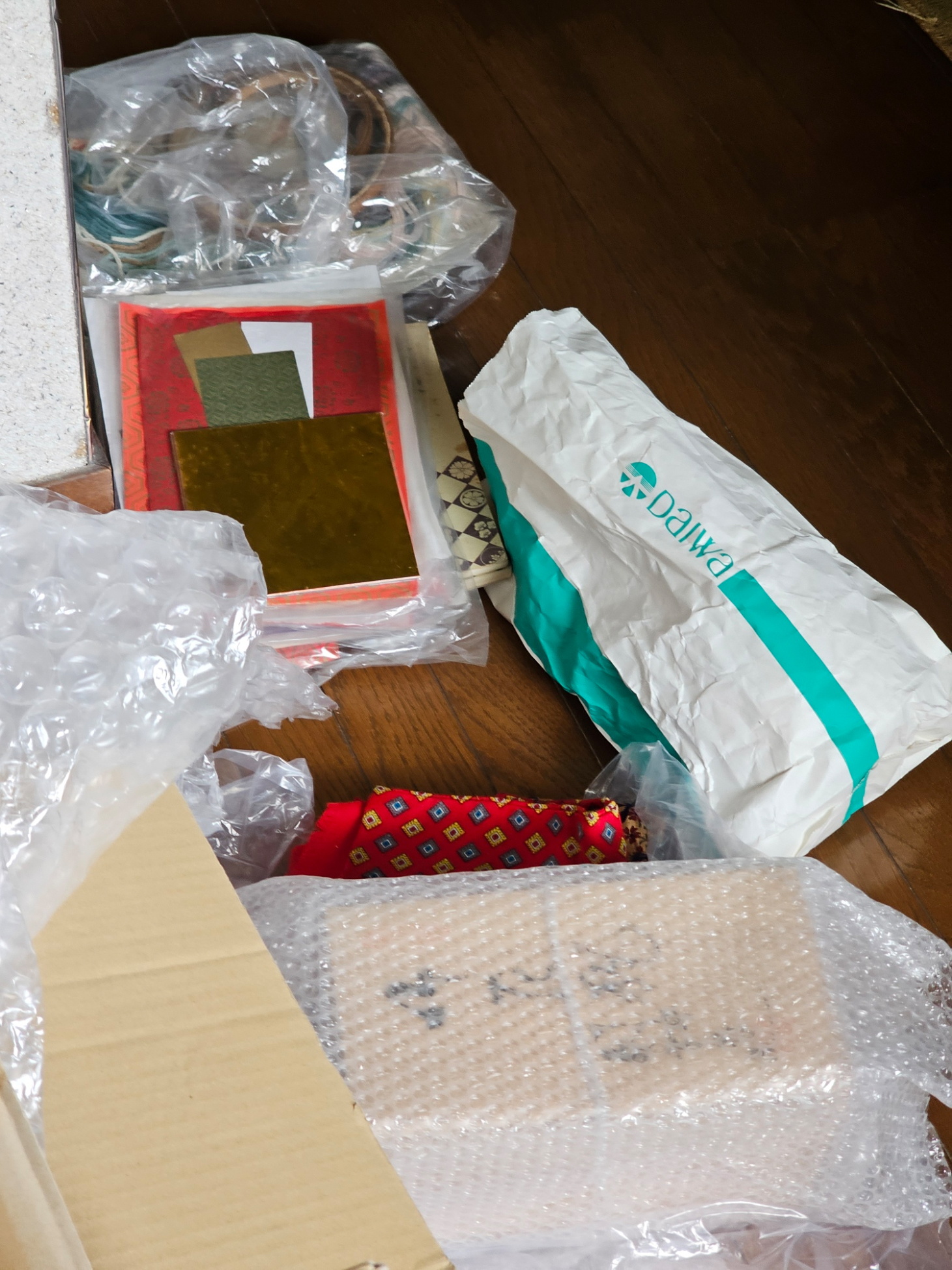
A camera slows the family down in a useful way. It creates a pause between handling and disappearance. To photograph something is to admit that the object may need another life beyond the moment in which it is touched. In Hanasaki, that pause mattered. Too many years had already gone by in which worry was louder than looking.
Documentation did not arrive here with museum neutrality. It arrived late, tired, and emotionally entangled. Which made it truer, not weaker. The family did not become objective. It became careful. The inside was no longer being met only by anxiety. It was being met by evidence.
Evidence has weight, but it is a different weight from burden. Burden drags. Evidence steadies.
Time in the Hand
The old newspaper changes the room again because it returns the house to ordinary time. Not to heritage in the grand sense. To a day. To paper that once felt temporary. To print that entered the room, lived briefly, and was forgotten into storage until hands found it again years later.
This is one of the deepest things an old house can do when it finally begins answering. It does not only return beauty. It returns days. The twins and the newspaper make that visible. The room is no longer only a place of old things. It becomes a place where lost time can still be handled.
A Statement of Purpose
By then the inside was no longer merely visible. It had declared what was required. The room had made its own demand: do not let this return to blur. Do not let labels fall back into silence. Do not let grouped meaning dissolve again into anonymous burden. What had been found had to be kept findable.
That demand is what gave Uchi its purpose. Not promotion. Not performance. Not the conversion of family difficulty into a tidy cultural product. Something narrower and more necessary than that: to keep the inside from vanishing again after it had finally become readable.
The family did not need every disagreement resolved in order to hear that instruction. The room had already said enough. The inside had come forward too clearly to be pushed back into mere feeling.
The inside became visible when the room began giving back order, relation, time, and care faster than dismissal could keep up.