Before We Opened the Door
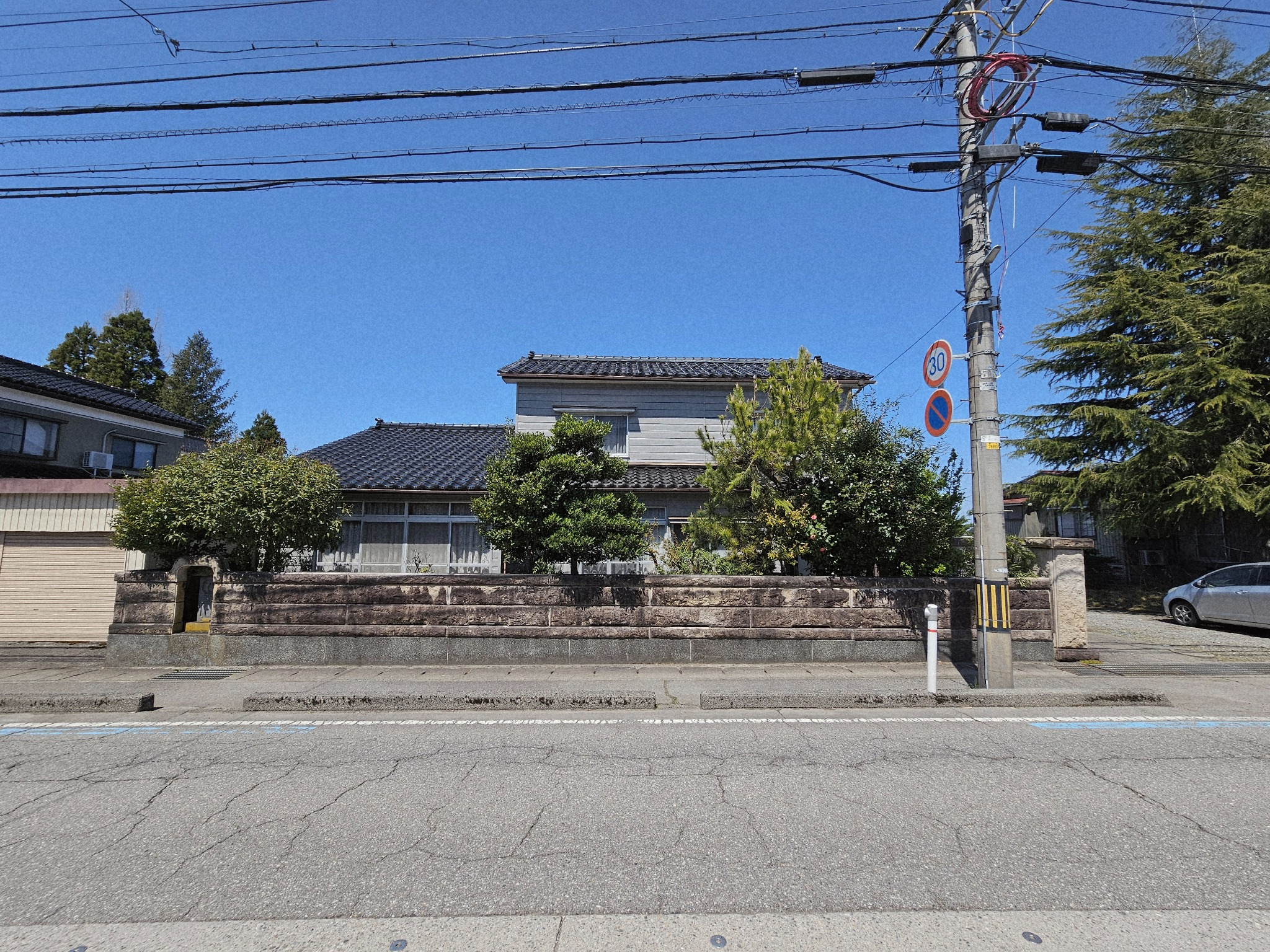
From the road, the house looked quiet. Quiet enough to postpone. Quiet enough to misunderstand. But silence is not peace, and an empty house is never empty of feeling.
Grass rose. Seasons turned. The river kept moving. The rooms held their breath. One person felt duty. One felt distance. One felt the burden of being nearby. One wanted systems. One wanted relief. The house stood there, gathering all of it without saying a word.
The deeper story begins there — before discovery, before inventory, before the kura answered back.
Earlier English Text
Land Lost
Life in Japan after everyone left — and what returns when the noise is gone.
Some places don’t die. They wait.
A house, land, and a family orbit — told without names. One Mother. One pair of Twins. One who lives far away. One from outside. One younger breeze with children. A river that remembers.
Prologue
Land Lost
There is a certain kind of silence that is not empty. It feels like a room holding its breath.
The house stands near water. A river that keeps moving even when people don’t. The seasons do what they have always done — spring arrives softly, summer comes loud, autumn smells like smoke and leaves, winter presses the world into stillness.
From the road, it looks ordinary: roof, gate, windows reflecting sky. But stand there long enough and the details begin to tell the truth. A garden grows without permission. Steps are used less often. A mailbox receives more air than paper.
In another era, this was a gathering place. Children ran near the river. On summer nights, smoke rose from charcoal and laughter rose higher. Then people left — not dramatically, just gradually, as life offered paths elsewhere.
What remains is space with memory, structures with history, and responsibilities with no clean ending.
The original plan was simple: sell. Let the house become someone else’s future. But the plan did not survive reality. Buyers did not appear. Beauty did not convert into market value. And some land, by law, could not be treated like ordinary property at all.
So the house changed category. It stopped being a listing. It became a family affair.
Gravity
The Cult of the Empty House
Not a religion. A gravitational system.
An empty house has a strange power. It does not ask for attention, yet it receives it. It does not speak, yet it creates arguments. It does not move, yet it rearranges schedules and relationships.
People orbit it. They promise to return. They negotiate around it. They resent it. They romanticize it. They avoid it. And somehow even avoidance becomes attachment.
The rituals are familiar: weeding, tidying, calling, postponing, repeating. A house that no one lives in becomes the stage where everyone proves something — responsibility, loyalty, distance, practicality, love.
Because the house is silent, it becomes a perfect screen for projection. The Mother sees continuity. The Twins see duty. The one far away sees a timeline that no longer matches daily life. The one from outside sees inefficiency and wants to engineer it away. The younger breeze refuses to let the story become only tragedy.
The house does not choose sides. It holds the pressure until people tell the truth.
Five Views
One Place, Five Truths
Everyone is right. That is the problem.
The Mother
She wanted to sell. That was the clean ending: release the house, lighten the burden, move forward. But reality refused closure. Now she watches the family tighten around something she hoped would become simple.
Her real goal is peace.
The Twins
Two voices that often sound like one. When one sister worries, the other confirms. When one complains, the other completes the sentence. The volume doubles. The certainty hardens.
They live close. They carry the local weight: neighbors, appearances, the fear that a neglected place becomes rumor. Weeds are not just weeds. Weeds are evidence.
They think the one from outside is lazy — not because he lacks work ethic, but because he does not show effort in the form they recognize: sweat, presence, shared struggle.
The One Who Lives Far Away
She is intelligent, practical, and far. She carries the house as an emotional landmark, not a daily task. She never intended to abandon anything, yet distance turns good intentions into silence.
She hears the accusations and feels the weight. She understands the Twins’ burden and still cannot perform physical presence on demand.
The One From Outside
He says he is lazy, and he means it as philosophy: he hates repeated inefficiency. He wants the gardener contract, the maintenance plan, the system that prevents the same argument next year.
His problem is not morality. It is translation. His work is invisible. His effort looks like avoidance. In a family that measures love in physical labor, invisibility gets labeled as laziness.
The Younger Breeze (with two children)
She arrives and the temperature changes. Shoes scatter at the doorway. Someone laughs too soon. Someone speaks too loudly. The Twins try to remain serious. They fail.
Her children move like they already belong — toward the river, toward the open air. The house, which has been holding its breath, remembers noise. Not argument-noise. Life-noise.
She does not deny the problem. She refuses to let the story become only problem.
The family can feel the spiral: weeds become resentment, resentment becomes inheritance, inheritance becomes law, law becomes paralysis. And yet the fact that everyone is still arguing is evidence of life. Abandoned places do not produce conflict. Only places that still matter do.
Across the Road
Across the road is a community center. A place where meetings happen, announcements are made, and someone always seems to be preparing for a small event. The building sits on land the family owns. The rent is small, almost symbolic, as if the land itself has agreed to serve the village.
This changes the story. The house may be quiet, but the land is still active. Nearby, the river runs. In memory, children laugh there. In summer, smoke rises from charcoal and the air tastes like festivals. In winter, the same river looks older and more serious.
A place like this is not merely owned. It is held. Sometimes that feels like privilege. Sometimes it feels like burden. Often it is both.
When Land Cannot Be Sold
Some of the family’s land is farmland. And farmland does not always move through the world like ordinary property. It belongs to a different set of rules — rules designed to protect it from being erased by quick decisions and speculative pressure.
So the family discovers a particular modern frustration: wanting closure and meeting a system built for continuity. It is not that the family refuses to decide. It is that the land refuses to become simple.
Land Speaks
After Everyone Left
I am the land.
I was here before the house learned its first winter. I was here when footsteps were common and when the road was loud with ordinary life. I will remain when the last argument fades into the trees.
Humans arrive with plans. Humans leave with regrets. Humans return with different bodies and slower time. I have watched all of it without needing to decide who was right.
When people leave, the border thins. What used to be “here” and “there” becomes less strict. At night, new visitors walk the streets — bears reported where children once ran.
You call it loss. I call it change. You call it abandonment. I call it a pause between chapters.
I do not hurry. Time works for me. Some places are not meant to be solved quickly. Some places are meant to teach families how to come back together.
Before Dismantling
The house is near the end — and yet still breathing.
People speak the words carefully: closure, cleanup, removal. And still the house does not feel finished. It holds the faint pressure of memory in its beams. It holds the shape of a family that once fit inside it easily.
Perhaps houses know something people forget: endings and beginnings often share the same doorway.
The family feels lost in an issue spiral. And yet it is coming together to tackle the problem. That is the signal that the story is not over.
There is a version of the future where the family retires part-time here — not to escape life, but to match it. When life slows down, the town fits who they become. A place that once felt heavy becomes the right size again.
Chapters, Not Conclusions
This is a living story. The next chapter is action.
A practical plan is forming — not to win an argument, but to reduce friction. A visible moment of effort, and then a sustainable system. Something the Twins can point to. Something the far-away can support. Something the Mother can laugh at because, finally, the family is moving in the same direction.
The younger breeze will bring noise. The river will keep running. The land will keep waiting. And the house — whether it stands or is dismantled — will continue to do what it has always done:
It will keep the family in the same frame.
This site is a record of how one family tries to turn burden into stewardship — and how a place can be lost and still quietly alive.
Uchi.co.jp
English doorway, Prelude, and the earlier Land Lost text kept together as two stages of the same house story.
Site Information
inside / family / legacy
Some places don’t die. They wait.